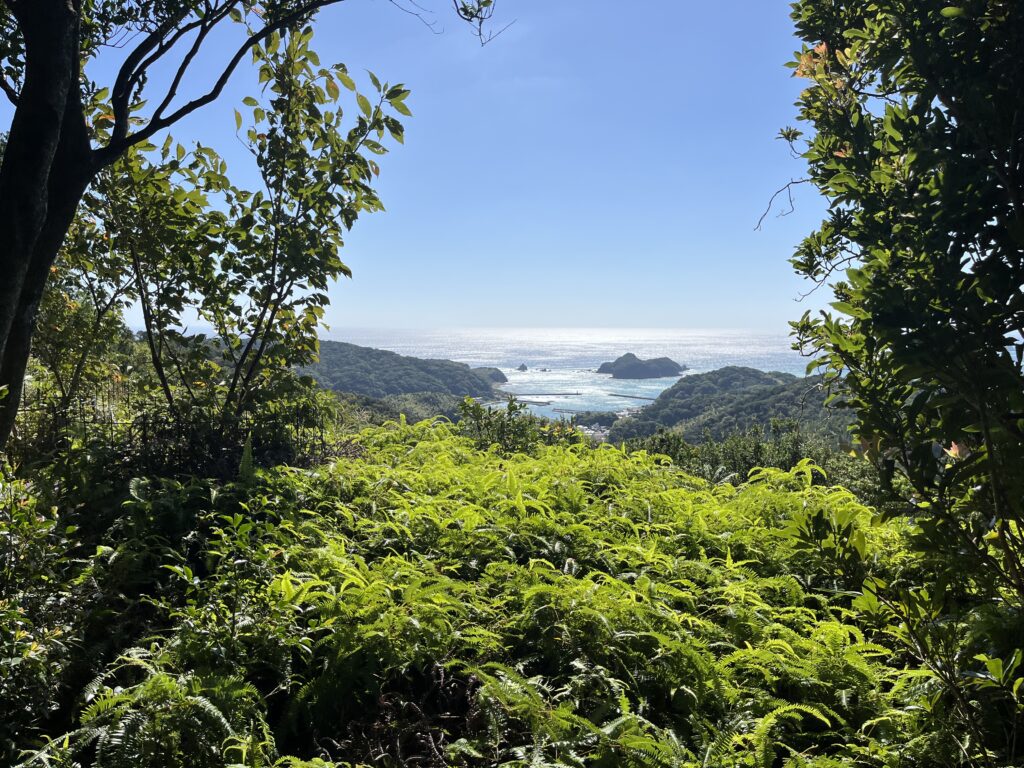
There may be trouble ahead. This walk wasn’t going to be easy. But first came the sea. The Pacific. An Ocean of dazzling sapphires, sparkling in the sun. I got my first glimpse of the sea as I crested a mountain early on the 7th day. It was a mesmerising, dreamlike panorama. Golden beaches beckoned in the distance, while sea stacks and stumps and micro islands peppered the coastline like geological morse code. It was a tropical paradise. The sea would be my companion for much of this journey. I couldn’t imagine a more perfect backdrop for this walk.
Following the night terrors that had followed me down the mountains and through the woods from temple 21, the day that followed was a walk in the park. Or by the sea. A week navigating the outer rim of Tokushima city now gave way to rural lands and then the ocean. Once again the butterflies and dragon flies soared and swooped through the wild flowers that blossomed on every patch of this fertile land. A warm but tender sun shone overhead, enhancing the natural colours of the land. The sea, when it appeared, was a tonic for the soul.
THE PACIFIC
Morgan Freeman intoned at the end of The Shawshank Redemption that he hoped the Pacific was as blue as it’s been in his dreams. When I first saw it, through a gap in the trees at the top of a hill, the Pacific was as blue as it had been in Morgan Freeman’s dreams. There was a resting spot nearby, and from there I gazed at the ocean for a time in amazement and wonder. It was a tiny slice of heaven. Shortly afterwards I was joined by Edward the Dutchman. We shared our stories of how we’d survived the terrifying descent from Temple 21 the day before. Those tales would be for the ages. I carried on by myself a short while later, and made my way down the hill via a thick and somewhat tempestuous bamboo forest. One tree was blocking the path, so I had to crawl under it. I later discovered that somewhere on that descent I lost the waterproof covering from my backpack. Perhaps that rogue bamboo tree had snarled it. It may have been an ominous sign of things to come, but the beauty of my surroundings that day offset any concerns I had for the challenges that may have been coming.
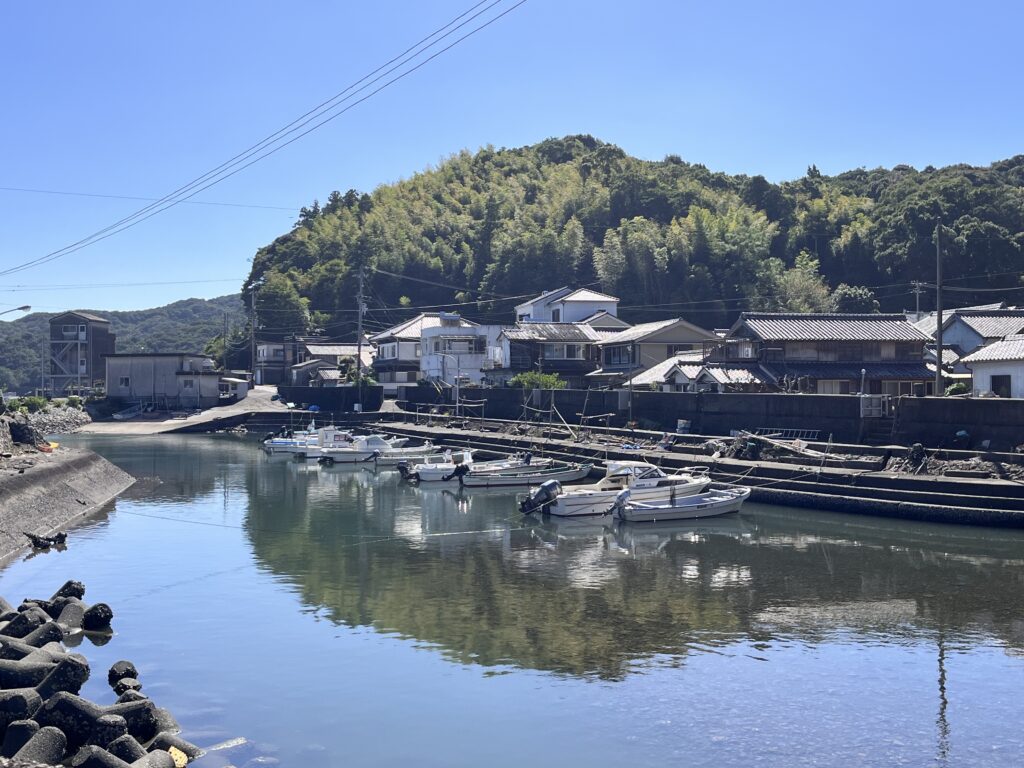
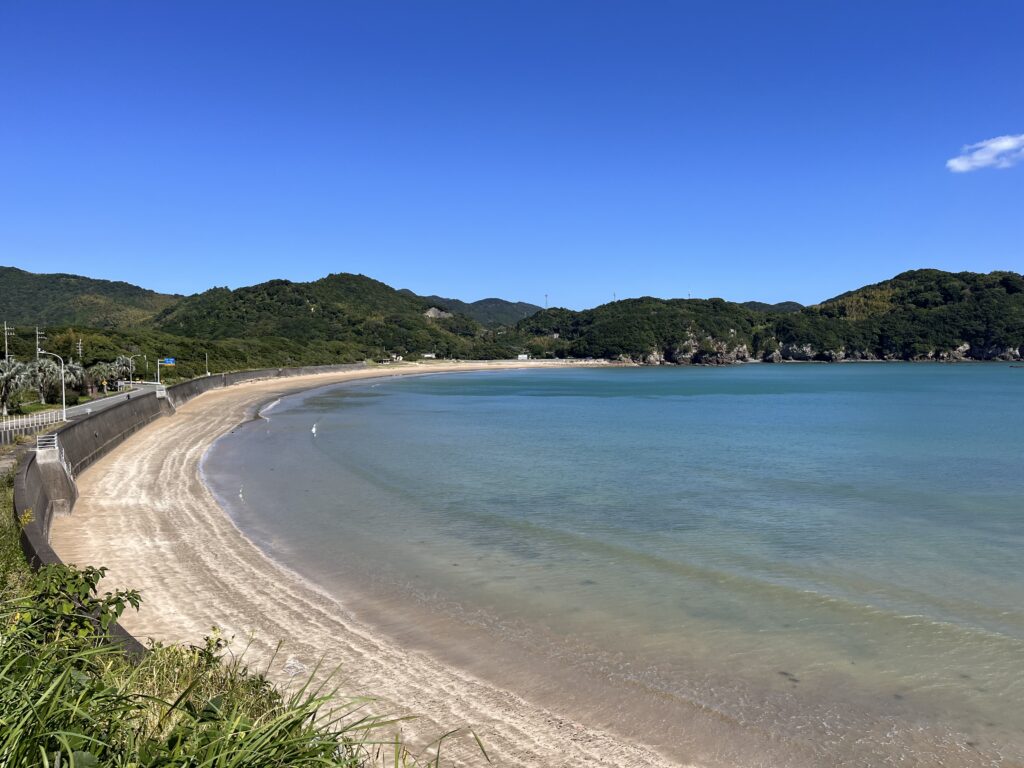
I reached sea level a short time later. The beaches were arcs of golden sand, but few to no people were to be seen along the shores. I had this little piece of the world to myself for a while, and I felt I had reached a place of peace and stillness. Temperatures were starting to rise so I had to keep my pace brisk. I passed through a pleasant fishing village called Kiki around noon, and the heat was starting to bear down upon me and drain my energy. I didn’t have very far to go that day, but I still needed to keep my strength up to get to temple 23. Throughout my travels, and especially on the caminos, the universe has had a habit of giving me what I needed exactly at the time the need arose. As the midday sun was starting to oppress me, a kindly old lady emerged joyfully from her house to give me an ice cream. How decent of her. And how fortuitous for. Perhaps it was further evidence that I was living in a simulated reality. As if I ever doubted that.
The path that day ran along some of the most breathtaking beaches I’d ever witnessed, and I finished that evening in the town of Minami, where I reached temple 23. Seven days of walking were complete, but now I wouldn’t see another temple again for a further three days. I stayed at a pleasant lodging that night, which also accommodated my French friend Francois, and two woman, the Dutch Anni and Solwej from Germany, who had also been part of the group since the beginning. Angela, Edward and Normand were also in town, and several of us met for a festive dinner later that evening. Normand, a retired cop, had indulged in a few too many beers, and was planning to return to his hostel to lead a singsong. That was more than I was prepared for, so I decided to go back to temple 23 and explore it a little more in the dark.
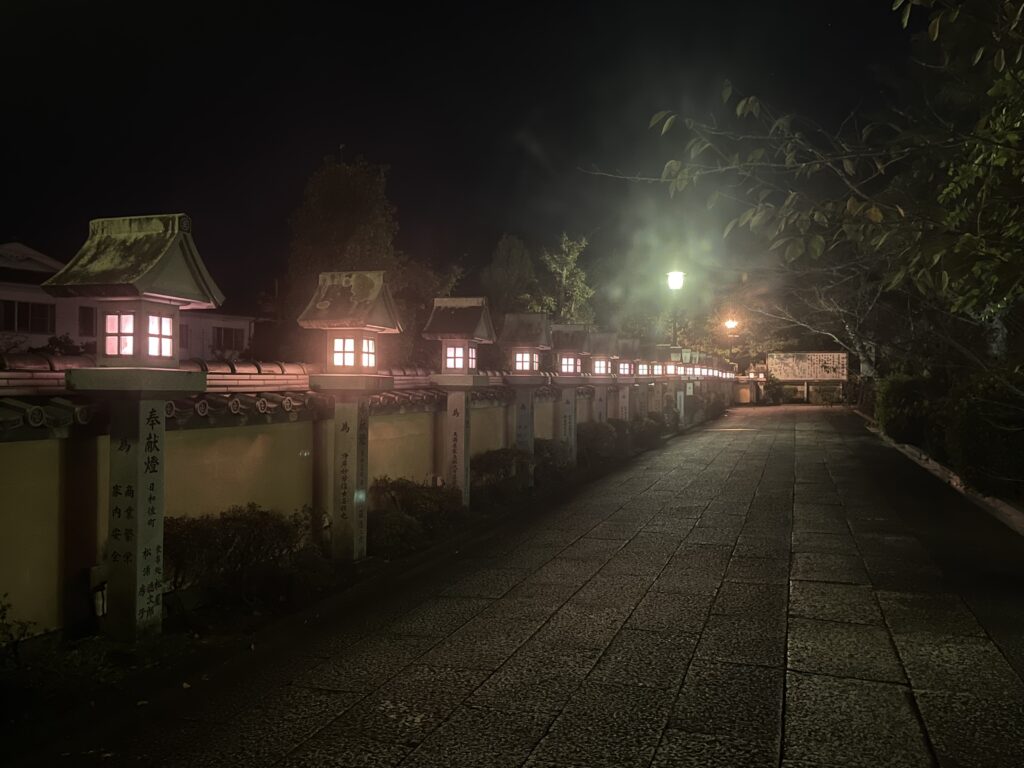
Temple offices close promptly at 5, but the precincts often remain open all night. 23 was located on a hill overlooking this pleasant town, and I could still wander around in the evening. Temples take on a different quality at night. The lanterns, which are standard features in many temples. are a decorative feature by day, but by night they cast a mystical light on these sacred grounds. I wandered around for a while, enjoying the peace and quiet that the evening brings, and felt a genuine happiness at what this walk had brought me so far. The ankle blisters, which had been a damning ordeal for the first few days, had largely disappeared. I had made some nice friends, the sun was shining, but not too intensely, and the deep blue ocean was going to be my travelling companion for the foreseeable future.
FEET OF FLAMES
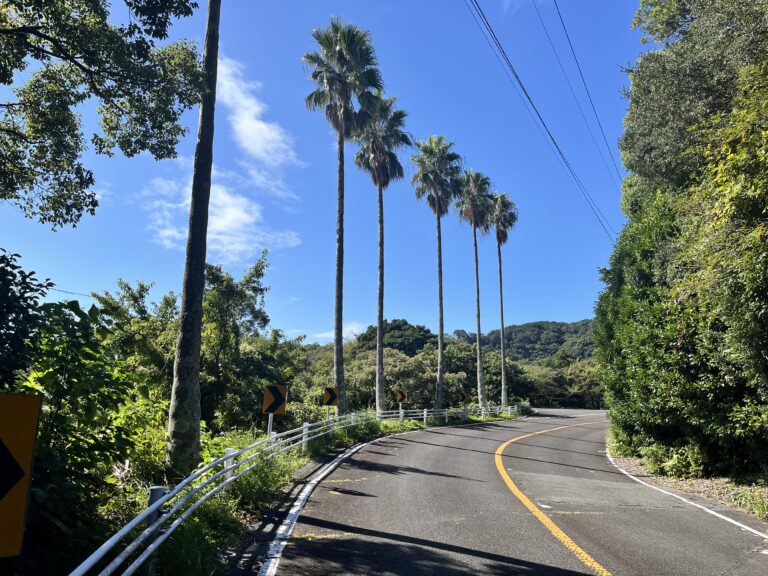
I’d felt slight blisters developing under the soles of both of my feet that day. I don’t wish to get too much into the mechanics of how blisters start or should be treated, but what started out slowly and threatened to be a minor irritant turned into the greatest challenge of this walk. It is said that more men have been defeated by blisters than by mountains. My trek through the mountains with the two Robs by night hadn’t stopped me, but what was developing on the soles of my feet was going to be a much more arduous ordeal.
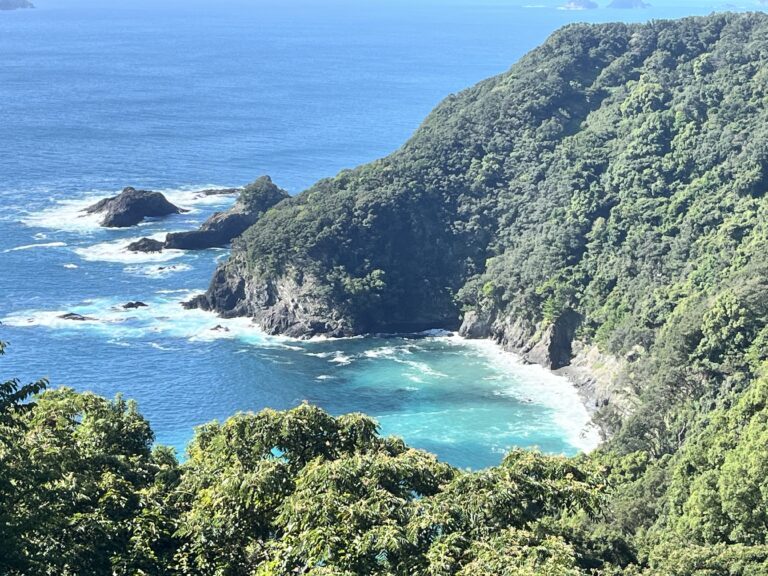
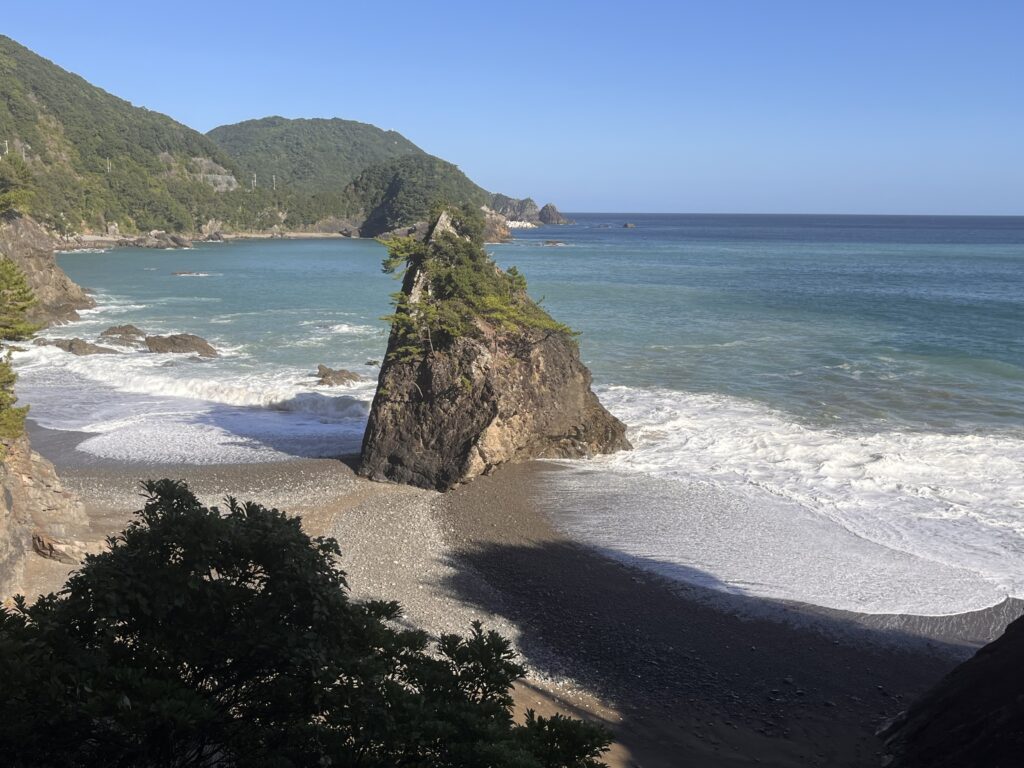
But that was for future John to worry about. The first half of the next day brought me along a road above the ocean, lined with palm trees and luscious verdant vegetation. Sea hawks, known as tombis, circled overhead, and the ubiquitous dragon flies and butterflies danced and hopped from wild flower to wild flower. To my left was the vast expansive vista of the Pacific. The road turned and twisted, twisted and turned, for many hours. Off shore was an island that resembled a prostrate corpse, while idyllic little beaches popped up in the coves and inlets along the coast. I took a wrong turn during the morning and it brought me down a stretch of road where a few quiet houses were located overlooking the sea. What a beautiful place to live, I thought. Then the path suddenly ran out, leading to a precipitous drop so I had to return the way I came.
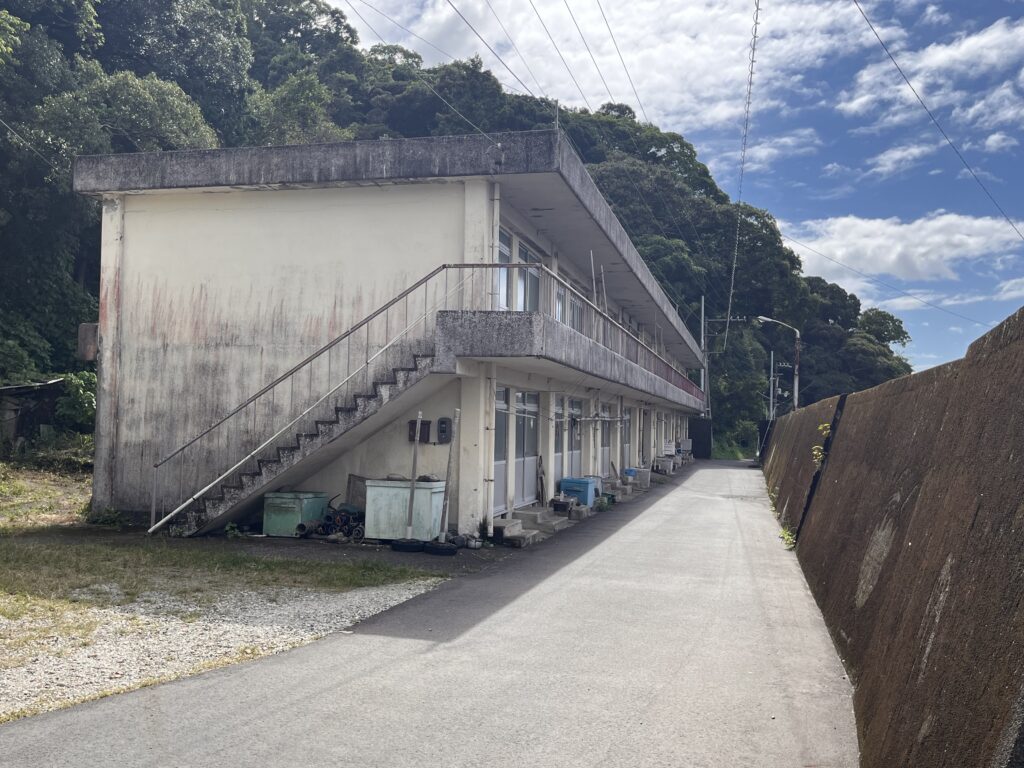
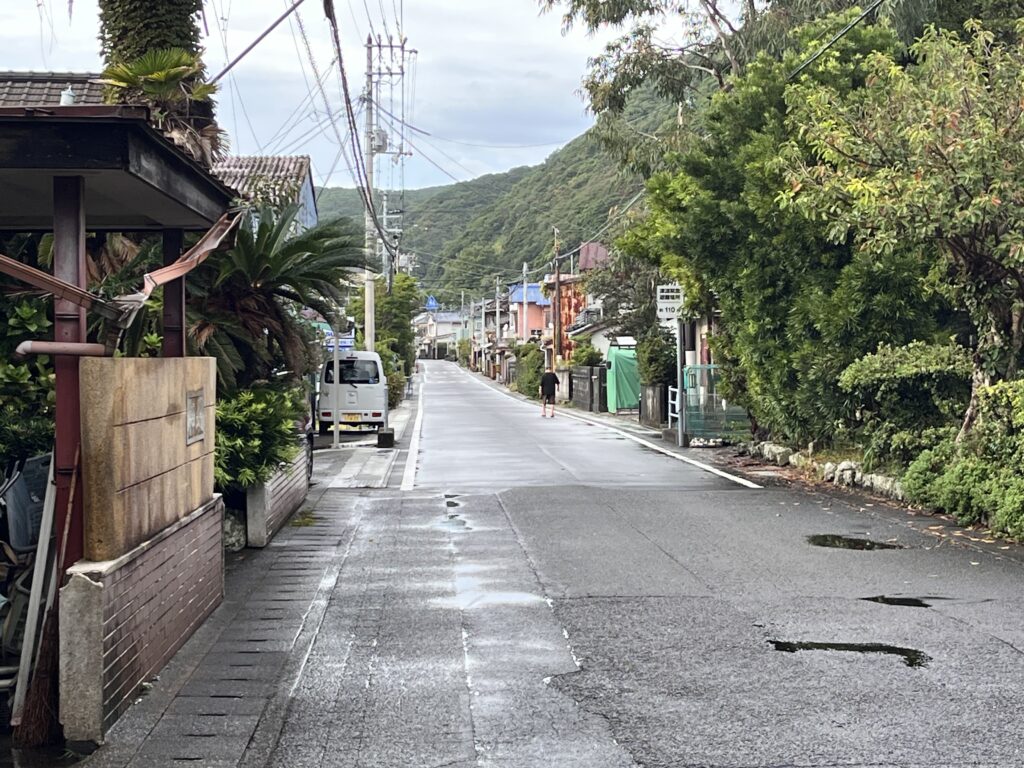
I reached a fishing village around lunchtime. Like so much of rural Japan it was eerily empty. Just a few, mostly older, people could be seen about. The houses and buildings were starting to decay. Some bits were rusting, some needed a coat of paint. Weeds were growing up through the cracks in the pavement. Japan was slowly dying. Many places were well maintained, but the dazzle and spectacle of big city Japan, with its electric energy and neon sugar highs, was nowhere to be seen out here. Ominously, I also saw my first tsunami walls in those parts. These concrete buttresses, built to hold back the tide, were a stark reminder of how this country lives in such a precarious relationship with the natural world.
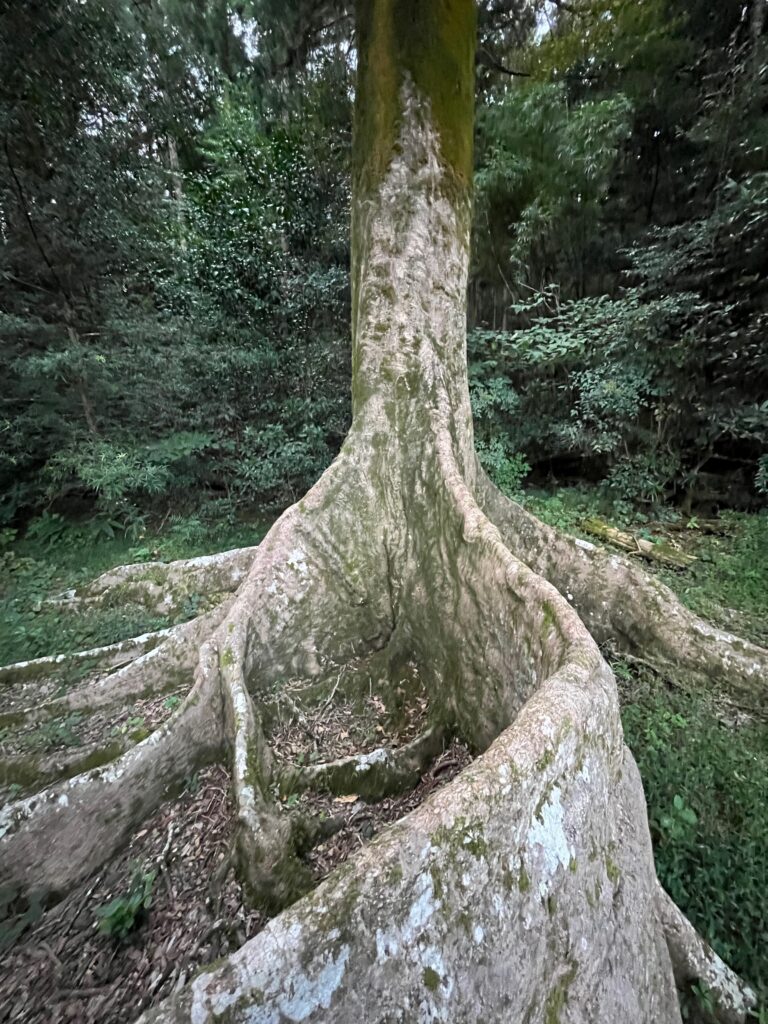
Lawson, ever present and faithful convenience store, provided me lunch that day, but it would also be one of the last convenience stores I would see for a time. A signpost I read as I exited the town indicated that the next temple was 64 kilometres away, by which time I’d be firmly inside the borders of Kochi prefecture. But for now, I still had a long stretch of road to get to my destination that evening, and I missed an arrow because I wasn’t paying attention, which added a couple of thousand extra steps to my journey. I also took a whimsical detour to see a tree with unusual roots. Night was starting to fall as I neared my destination. The last stretch was along a promenade, where the smell of the salt water kept me company. It turned out to be a much longer walk than expected – I was a hair’s breadth short of 50000 steps that day – and by the time I bedded down for the night my feet were on fire. Not a minor chimney fire either. This was a towering inferno.
Blisters come and go. That had been my experience across five caminos. But like an ill gotten tattoo, or a guilty conscience, these were something I was going to have to live with for a long time. I had brought some medical supplies, enough to see me through the trip, I assumed. I thought I had enough experience in chiropody to treat myself. I was wrong on all fronts. And on top of that there was a typhoon on the way. I was eight days in and the honeymoon was now well and truly over. I messaged a friend that night and asked him to remind me why I was doing this. “Because you can,” he replied. Could I? I suppose I could, but why the hell was I doing it?
TYPHOON AND OTHER STORIES
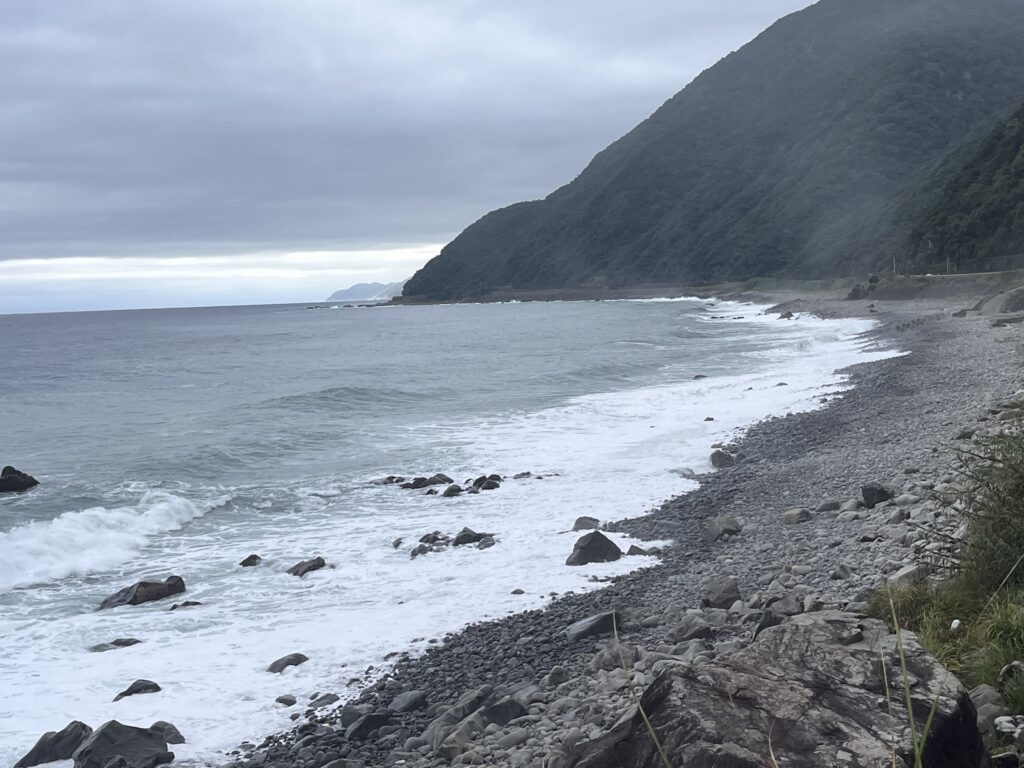
My motivation to walk the Henro was never something I’d considered very closely. I’d walked my first camino at thirty looking for answers, a jejune motive for a callow youth. The second at thirty nine was a classic midlife crisis crusade to cross an existential void. It worked. I walked the third, fourth and fifth more because they were there, and I had the chance to do them, rather than because I was in some grand pursuit of meaning. I wanted to test myself physically and mentally. I wanted to shake myself out of my comfort zone. I wanted to live closer to the edge. I wanted to feel alive. There is something exhilarating about not knowing where you’re going to sleep tonight, where you’re going to find food or water, what’s coming around the next corner, who you’re going to meet, or how your body is going to cope with the stresses and strains of walking long distances.
So what brought me to Japan? A plane, in short. A plane and a sense of adventure. Though now in my 50s, I wanted to prove to myself that I could still undertake a journey of epic proportions and endurance. In life there are years where nothing happens, but on pilgrimages there are weeks where lifetimes take place. Everyday on the camino I lived with uncertainty, fought with fatigue, pushed myself further and harder and became acutely aware of new surroundings in a way one never is at home. Now, here I was in Japan feeling all the same things, but multiplied by a factor of ten. Maybe I was running away. Perhaps I was chasing something that couldn’t be caught. I had the opportunity to do the Henro and I took that chance. The walking was now the motivation. Whatever grand narratives it may serve was secondary. I was here and I was riding the rollercoaster of life. And I had blisters.
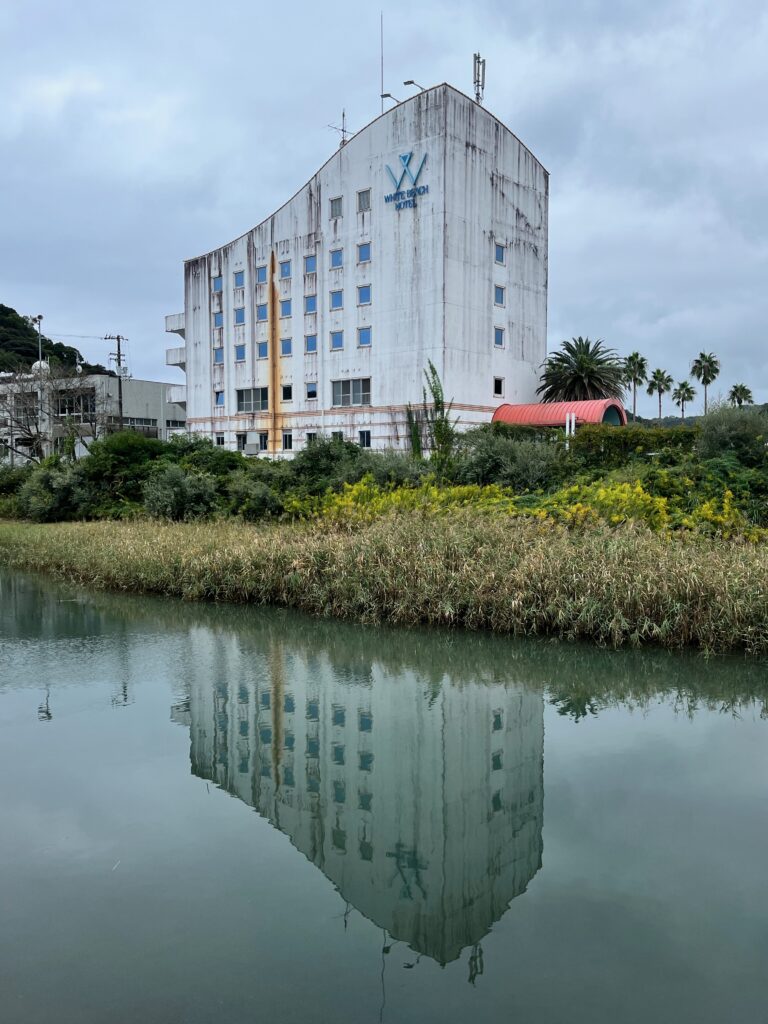
Clouds had gathered overhead as I set off from the sleepy lifeless town of Kainan the next morning. I was heading down the coast to Cape Moroto. It was due to be a long walk that day, and a typhoon was brewing. The path mostly followed the main road, Route 55, a long straight road running parallel to the ocean, sometimes offering good views, sometimes not. And then there were the tunnels. Sometimes they were short, sometimes long. They funnelled the wind and the sonic booms of the passing cars. Sometimes there were footpaths in the tunnels, sometimes not. While not quite an episode in terror, it wasn’t a pleasant contemplative walk in the park either This was to be my lot in life for a while. The gathering storm clouds turned the Pacific a shade of grey. The beaches looked less inviting in this weather, and the decaying buildings that dotted the coast told their own story. The rust and weather stains on the exterior of one hotel were evident from a distance. When I saw it up close I was surprised to see that it was still functioning. Life was going on, but the glory days of this region were well behind it.
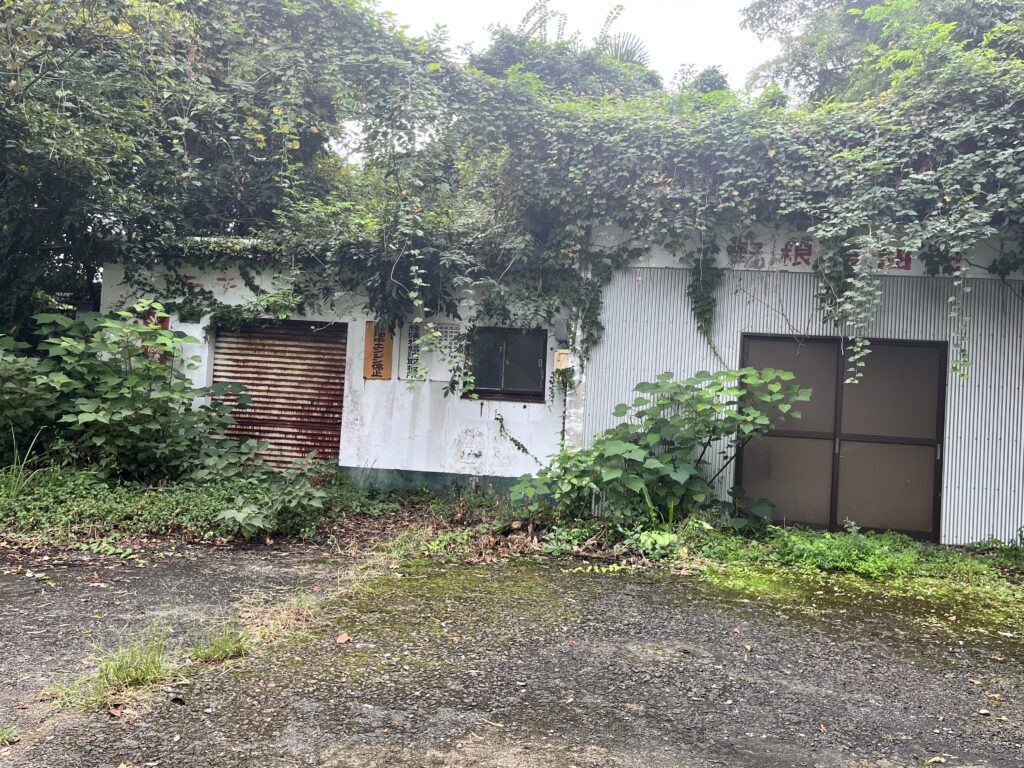
I crossed from Tokushima Prefecture into Kochi that morning. This was symbolic as it marked the end of the first physical stage, which in pilgrim terms was known as the stage of adventure. Kochi was the ascetic stage. I was already feeling it. The road was becoming routine now. The body was no longer fresh and agile, but battered and weather beaten. I was starting to lose weight and my skin was being toasted by the sun. And I had blisters. The road continued on down by the coast, and I was starting to feel weary as the journey progressed. In the early afternoon I found a bench outside an abandoned business and lay down for some shut eye. I’d heard that sleeping in public is considered something worthy of respect in Japan, but there was no one around to witness my siesta.
The typhoon was on the way, but was still holding off. I hoped it would until the evening. The road continued to follow the path of an increasingly restive ocean. Some traffic passed by, many motorbikes, but this was otherwise a fairly empty corner of the world. I stopped to visit a shrine at the side of the road. Shrines are devoted to the Shinto religion, while temples are Buddhist, but there is often overlap between the two and they frequently co-exist side by side. Shrines have imposing tori gates to mark their entrance, and their interiors usually consist of a courtyard and a central place of worship. This one was on the side of a hill and like everything else in this part of the world it looked neglected and abandoned. The sacred had once been commemorated here on this isolated stretch of the Pacific. I too paid my respects, but I suspected not many others would be keeping that tradition going for much longer.
It was five when I reached my resting point for the evening. The rain arrived just as soon as I did. My colleague Edward was also staying in this house, run, as always, by a friendly Japanese lady. We were joined as well by Kentaro, a young man native to this land, who was also undertaking this adventure, and fortunately for us spoke English. He proved invaluable in helping us book accommodation ahead and navigate some of the challenges of Japanese culture. The rain kept us imprisoned in the house that evening, but we had everything we needed inside. How it would be the next day only time would tell.
FRIED FISH
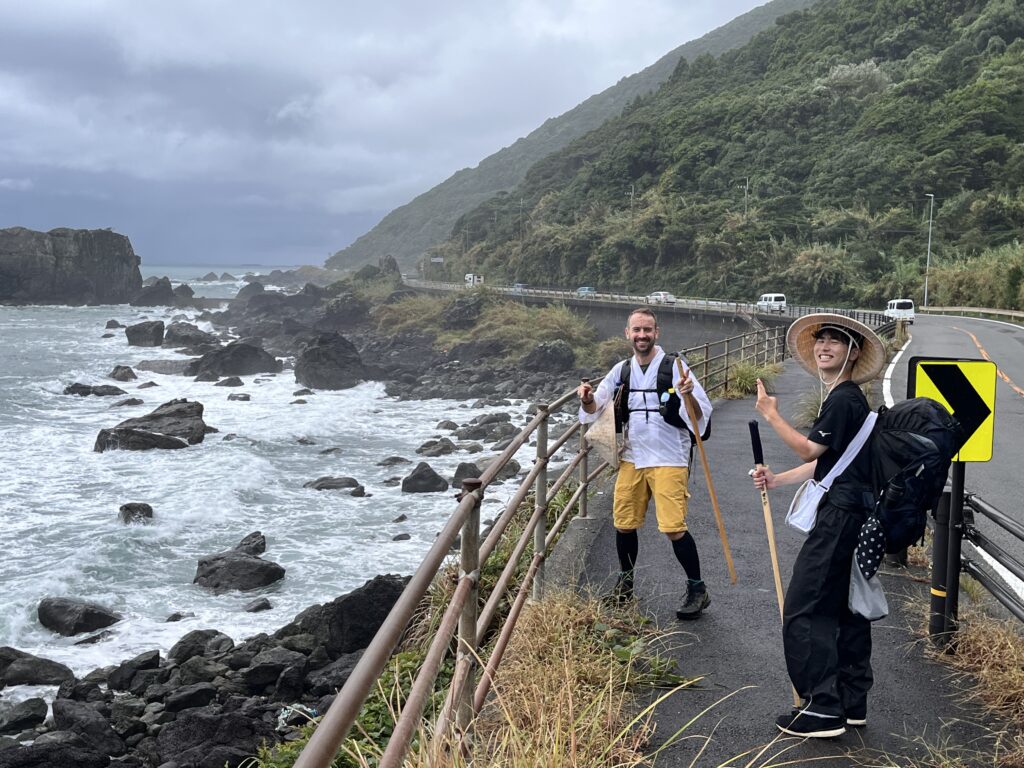
The typhoon had spiralled off in another direction, but the tail end of it still brought lots of rain. Thankfully it was warm rain, but we still got wet. And I still had blisters. The route leading down the cape towards temple 24 led us along high tsunami walls. As we headed further south we had access to more natural coastal walkways, beautiful no doubt in sunny weather, but in a storm the crash of the waves against the rocks created massive geysers, a sight that was equally spectacular to behold, even if we got soaked while enjoying the natural display of wonder. Kentaro went on ahead, so Edward and myself carried on at our own pace. The rain grew in intensity as we progressed, and it got to a level where we decided to stand in for a while until it eased off.
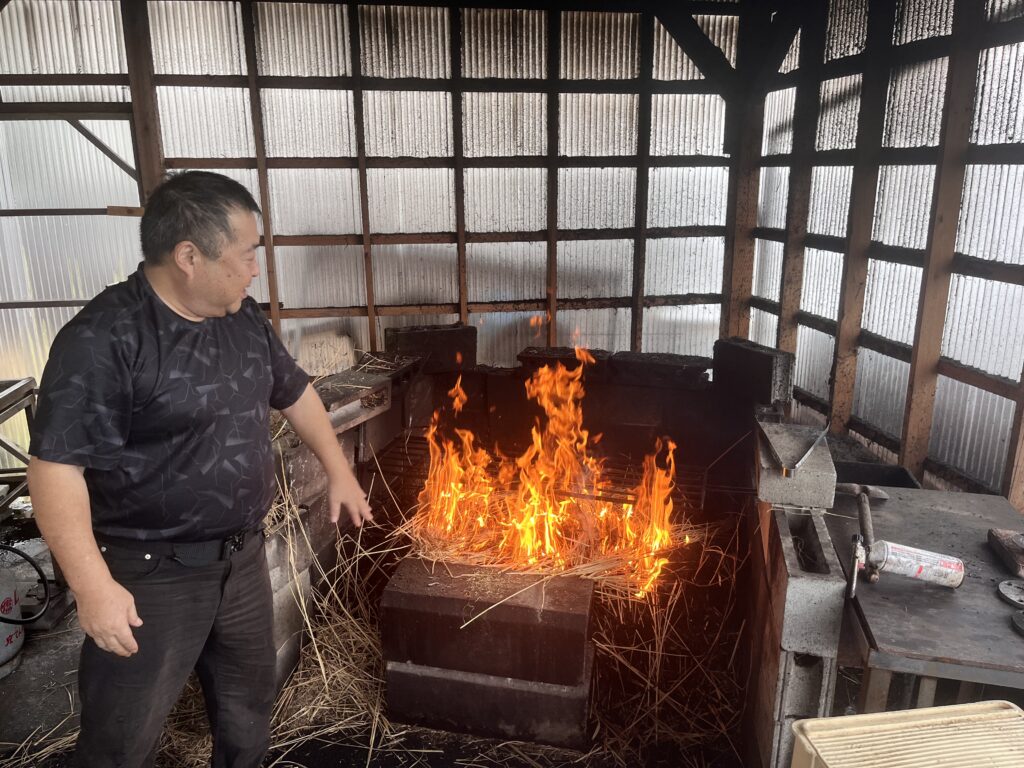
We saw a building with a porch out front, so we took shelter there. It was hard to tell what any of these places were used for, if they were used at all. There was a roll up door covering the entrance and it opened shortly after we arrived. A man came out and offered us milk crates to sit on. We thanked him for his generosity and hospitality, and later he invited us inside and gave us coffee. He ran a fish business. He smoked frozen tunas over a straw fire. He showed us YouTube videos of his work and then gave us a demonstration of his craft. The heavy shower had turned out to be a fortuitous event. Edward and I both invited him to come and visit our respective countries. He said he would like to but had no money. Sadly such is the life of many a small business owner in this quiet corner of Japan.
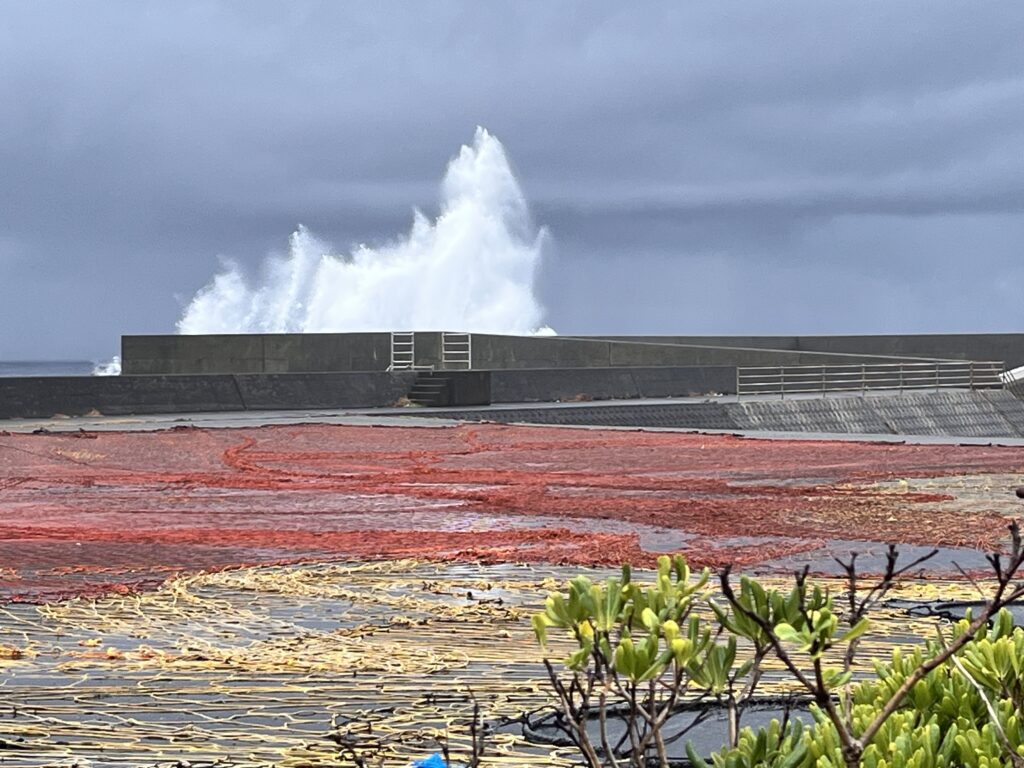
We carried on down the wild Pacific way, where the white horses of the angry sea crashed high into the air. As we neared the end of the Cape we reached a cave where Kobo Daishi, the Buddhist monk in whose footsteps we were following, was supposed to have reached enlightenment. Shortly afterwards, in the early afternoon, we reached temple 24. It was another tranquil spot which, like so many of the other temples, required a bit of a climb to reach the summit. The rain was still falling lightly, but the clouds were breaking further out on the sea offering a glimpse of a sunnier future. Edward and I rambled on as we turned around the Cape and started to head north. The road brought us along quiet streets where lots of traditional Japanese buildings were surrounded by tropical trees. It was a verdant land, rich in natural growth, but it was also evident how nature was reclaiming the man made environment. Empty houses were becoming overgrown, buildings were starting to rust, and the one thing that was most absent in these streets was people. Life was obviously continuing but it was coming to a slow end.
And I had blisters. These were no longer minor irritants. These were international incidents. These were the kind that would cripple a horse. I was no horse but I was in pain. Both feet were stricken. While walking long distances I became accustomed to the pain, but if I stopped it would take several minutes to acclimatise to the terror before I could resume walking at a normal pace. Without boots I had to crawl like a baby or stagger like a drunk at a wedding. Yes, the prefecture of Kochi was definitely going to be the ascetic stage of this journey. And this was only my second day in that region.
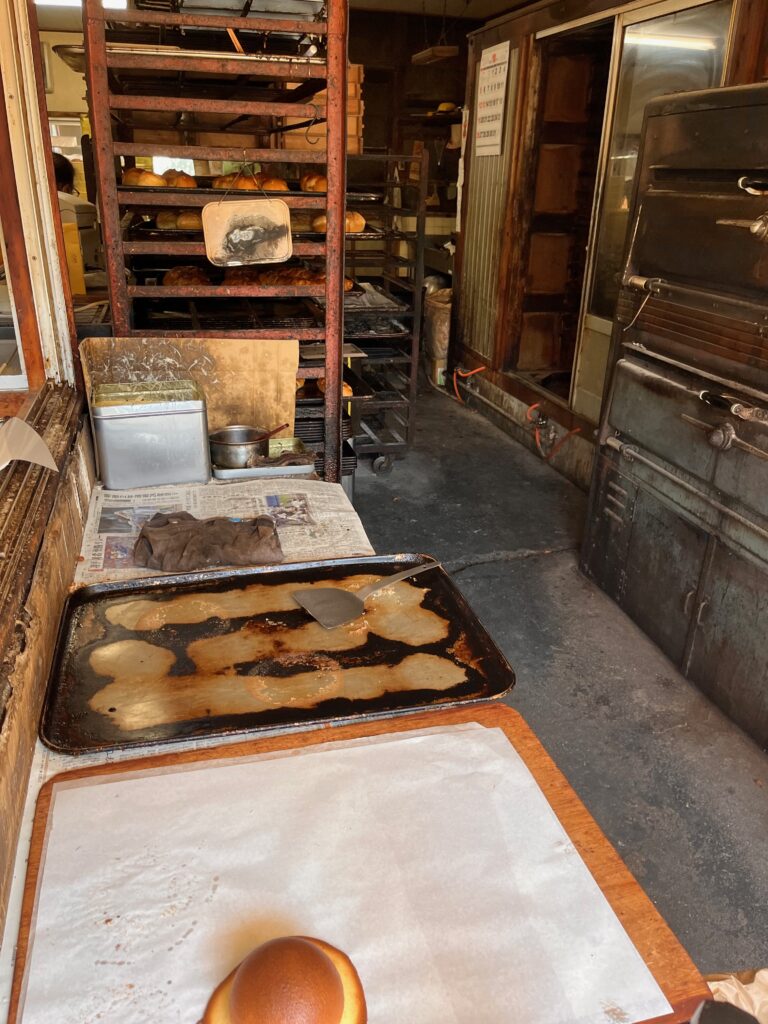
Edward and I continued to cross paths over the next few days and we shared our stories as we made our way along the road. Japan turned up many surprises and charms. On a traditional street in a quiet town we found a bakery serving freshly made bread and buns. We bought a couple. For a moment I had to revise my judgement that the Japanese don’t do bread, but a trip to the next Lawson led me to return to my original opinion. Later we ate lunch in a quiet meadow, high on a hill above the Pacific. I’d had many a lunch and conversation in spots like these along the caminos. World class dining in the most sumptuous restaurants couldn’t even begin to compare.
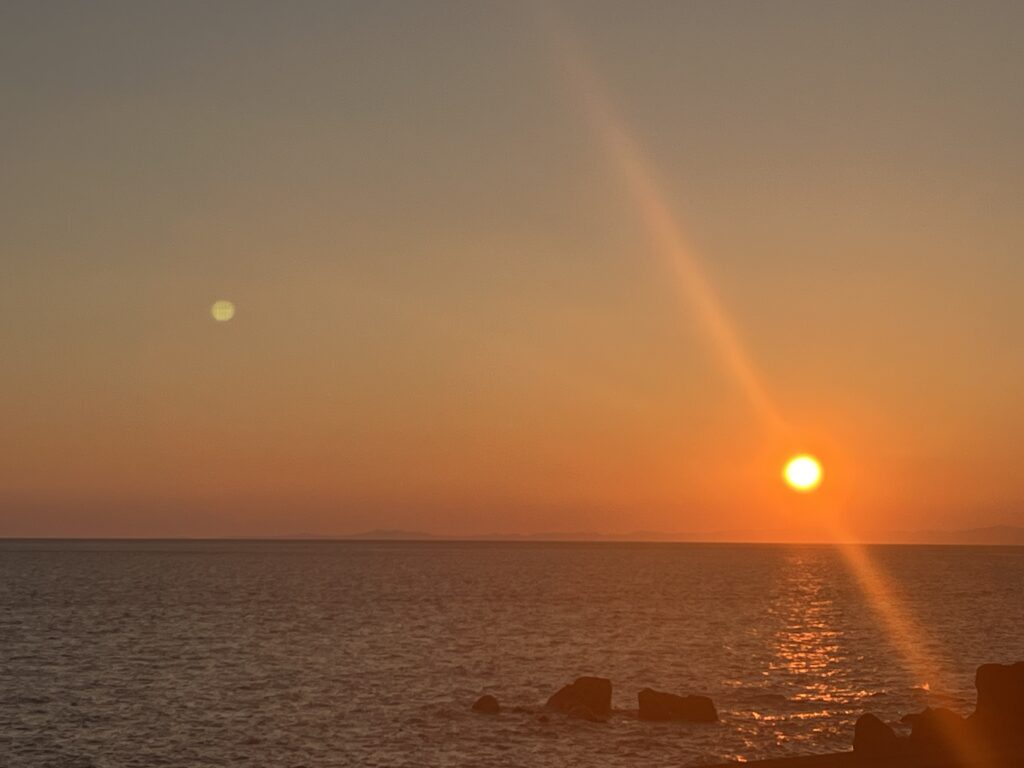
The deep blue sea was a constant companion, warm and inviting, but few swam in those parts. Beaches were plentiful but bathers were absent. Jellyfish I suspect is one of the reasons. I witnessed stunning sunsets along that stretch of coast, though I was never up early enough to see the famous rising sun for which this land was named. The towns along these stretches of road were amiable, neat, tidy, well maintained. And quiet. The people were normally friendly and generous. Most people said hello, many offered gifts of drinks or sweets, though we did have one encounter with an angry driver who gesticulated rather rudely. How unJapanese of him. My lodgings were consistently comfortable and welcoming. In one they even put out a mini Irish flag at reception to greet me. The food was always good. And I had blisters. I suppose those foot fiends were the price I had to pay to witness the curiosities, charms and minor irritants of everyday life in Japan.
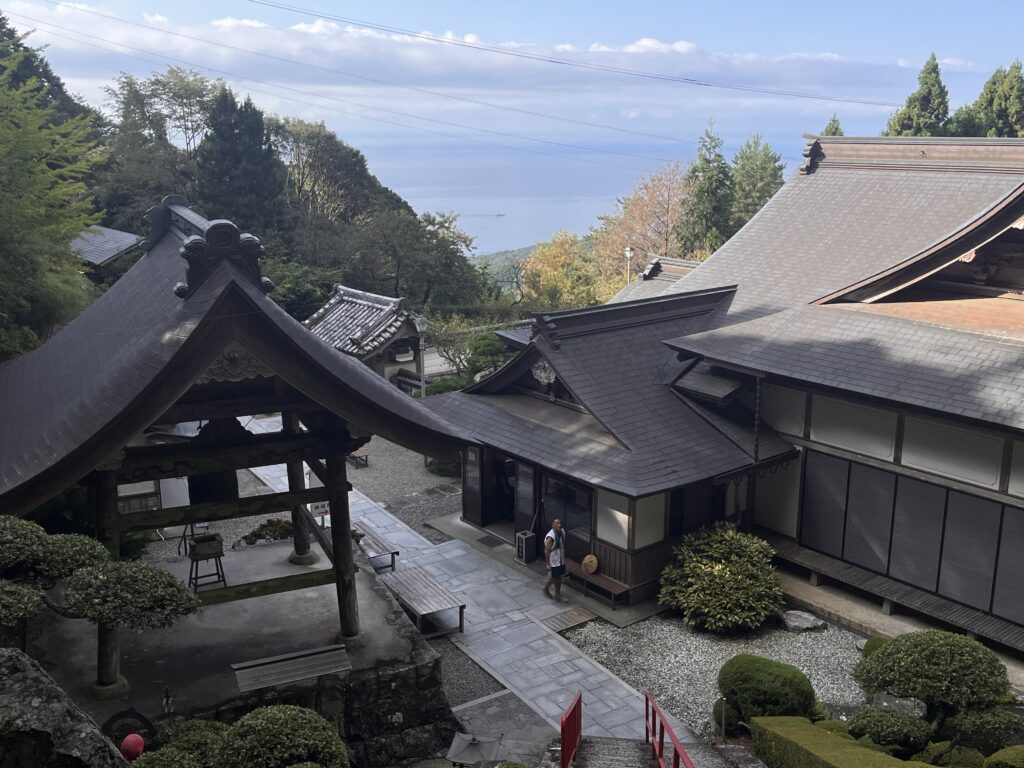
The physical path to each temple ranges from a walk in the park to a high intensity mountain climb. Temple 27 was one of the most challenging to reach. It was at the top of a very steep hill, a 500 metre hike from sea level where I was staying. I was no longer phased by mountains, not after what I’d endured the previous week, but as I mentioned before more men are defeated by blisters than by mountains, and the problems with my feet were growing in intensity. The walk up to that magnificent temple was a manageable slog, but coming down the pain became more severe. Every time my feet made contact with the pavement the blisters screamed their presence. I sometimes listened to music or podcasts to drown out the noise, but it never completely silenced it. Long stretches on hard surfaces made it more severe.
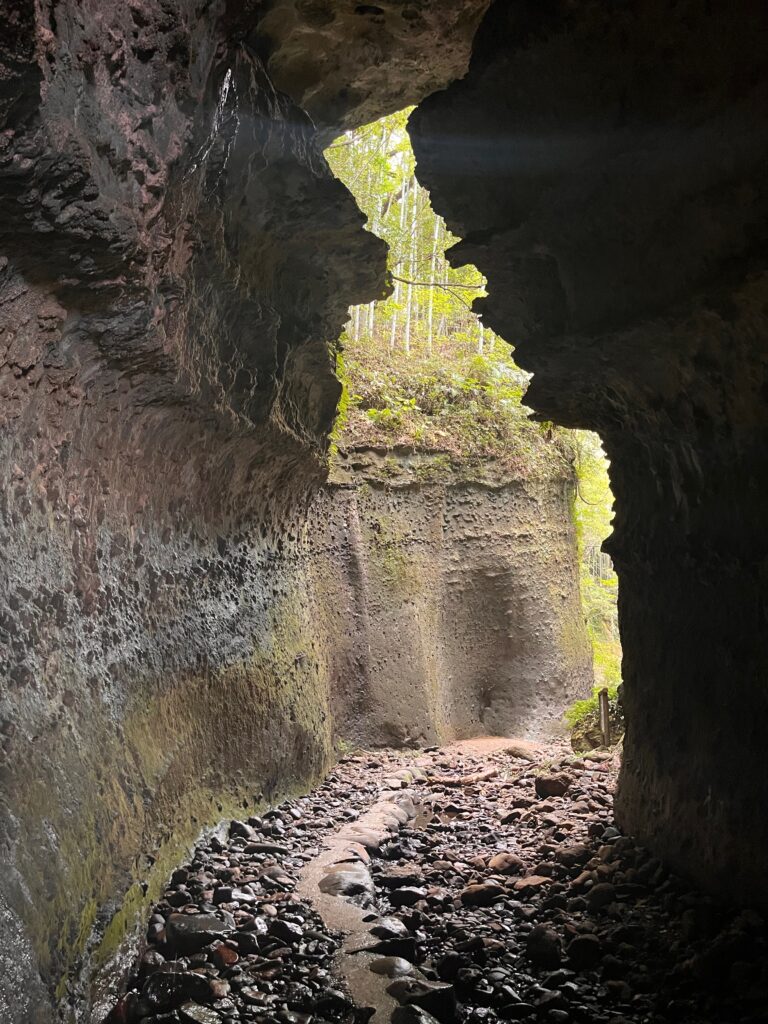
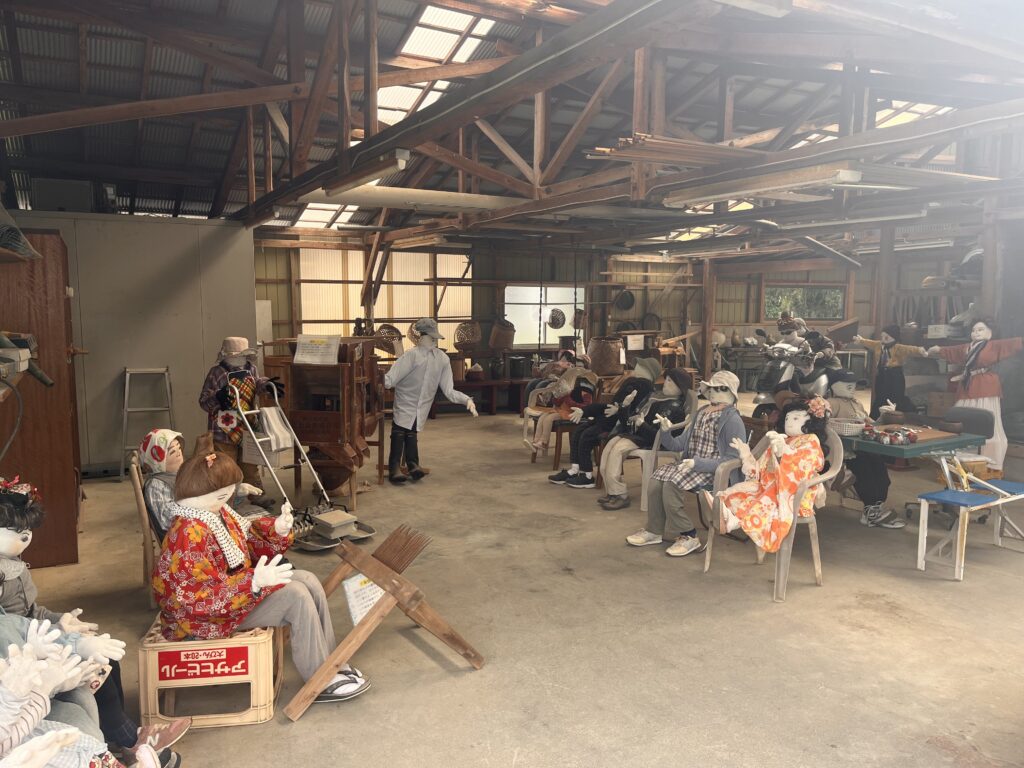
There was an optional detour further along the route that day which diverted from the busy road and brought me through Ioki Cave to a hidden gorge. This rocky path would have been tricky under foot at the best of times, more so when my feet were incapable of balancing properly, but the diversion which brought me through a magnificent mini canyon was worth the discomfort and occasional risk of death. I crisscrossed a stream, climbed up the side of a ravine via a rope, and finally emerged into the countryside above. I ambled (or hobbled) on a short distance past colourful fields of crops and cereals, when I came across a large shed with open doors. I looked inside and it was full of life sized mannequins seated as if they were attending a lecture. It was so eerie and out of place for such an otherwise ordinary semi rural setting. I’d seen some mannequins at the side of the road from time to time, and would encounter more in the weeks ahead. I heard that an old woman had made a cottage industry from manufacturing these. They were produced to substitute for all the people that had left these parts. The evidence of a declining population was abundant in all the empty houses and businesses scattered around the island. What was not so obvious was the loneliness that remained in the hearts of those left behind.
RESIGNATION
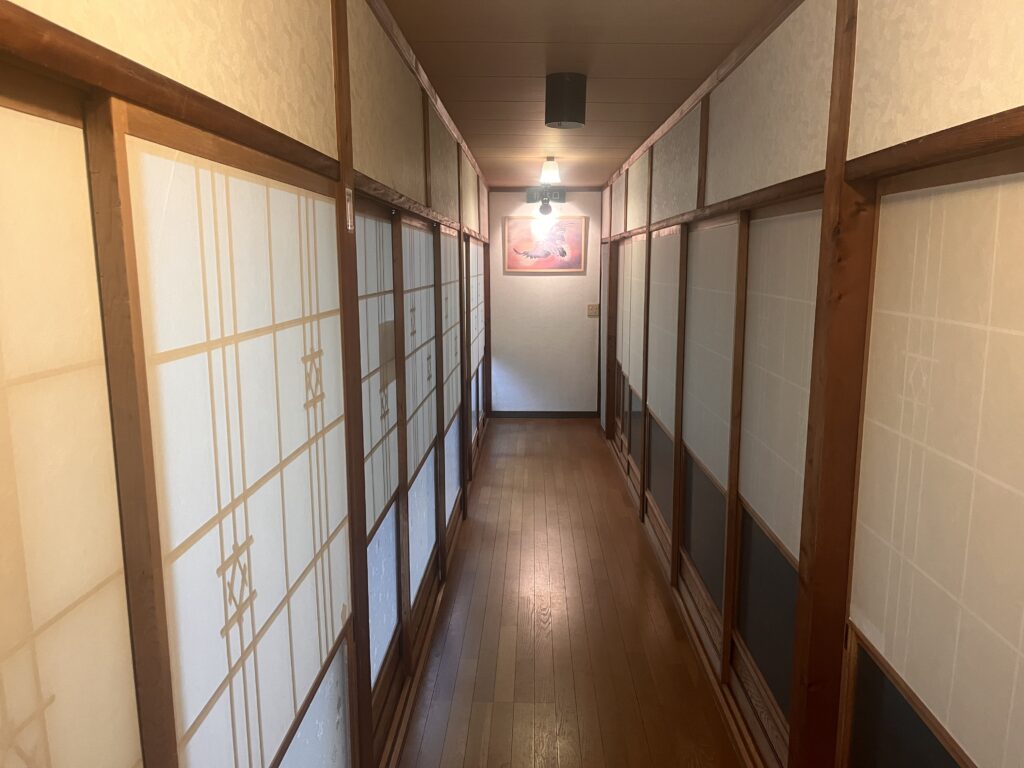
I woke one night and in trying to stand upright I staggered and stumbled so badly I nearly crashed through the delicate paper and wooden latticed walls of my room. The blisters were now at crisis point. I was heading to Kochi city that day. It was a healthy walk of around 30 kilometres. I had no choice but to persevere. I had three temples to visit that day, and I reached the outer perimeter of the greater Kochi area early on. The sights of Japanese streets were all too familiar by that point – traditional designs sat alongside modern prefabricated buildings. Clusters of wires tangled overhead, while tarmac roads and concrete gutters pounded my feet underneath. What had been new and novel a few weeks before was now routine.
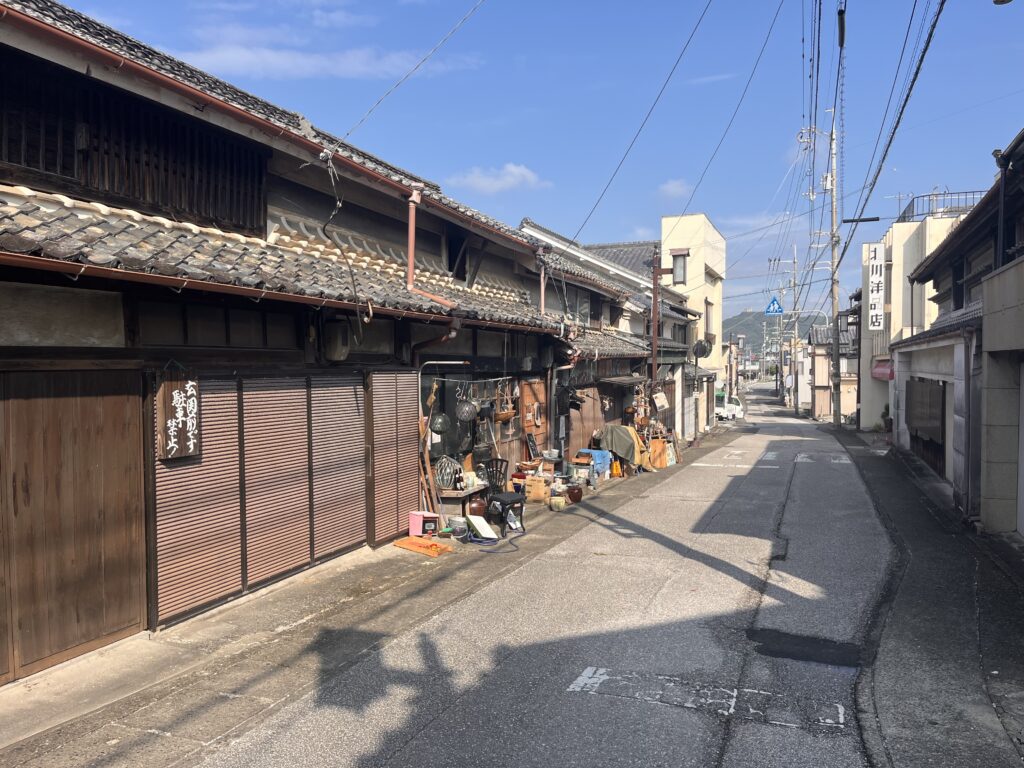
As I headed closer to Kochi, a destination I didn’t expect to reach until evening, the roads got busier and the buildings were more commercial – supermarkets, pharmacies, petrol stations, the stuff of everyday life. I spotted my first honesty box around here. These are stands where farmers leave bags of their produce on display. Passersby can buy what’s on offer and place the money in a box. I can’t imagine how long the products or the box would last in other countries, but contemplation of such theft is probably not even legal in Japan. I bought some very refreshing mandarins. Citrus fruits and khakis grew abundantly on Shikoku. Many trees grew right along the paths in the gardens of locals. Again, picking them from the trees was something no one would dare think about in Japan. The shame of doing so would probably curse the family of the perpetrators for three generations. But locals frequently and willingly gifted fruit to tired and weary pilgrims, so I didn’t have to think about committing grand theft and the shame that it would cast on my descendants.
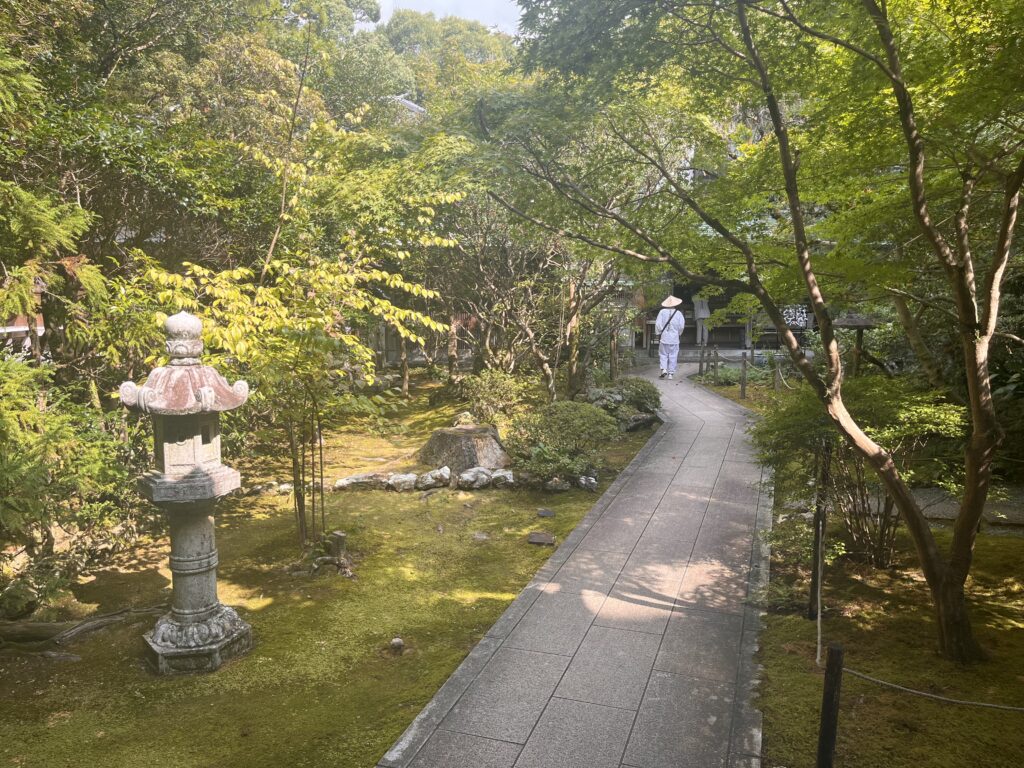
After a drought of temples, they were plentiful that day. Around big cities they always came thick and fast. 28 was the first, a peaceful, verdant zen garden, which necessitated a healthy but mercifully not very long climb to reach. I rambled on from there via farmlands and ricefields. Many people, old and young, were out harvesting the crops as I passed by. Elderly people, some of the oldest I’d ever seen, continued to work tirelessly in these fields. They had toiled for decades to produce food, and continued to do so despite their delicate frames. What they must have seen and endured in their lives was immense.
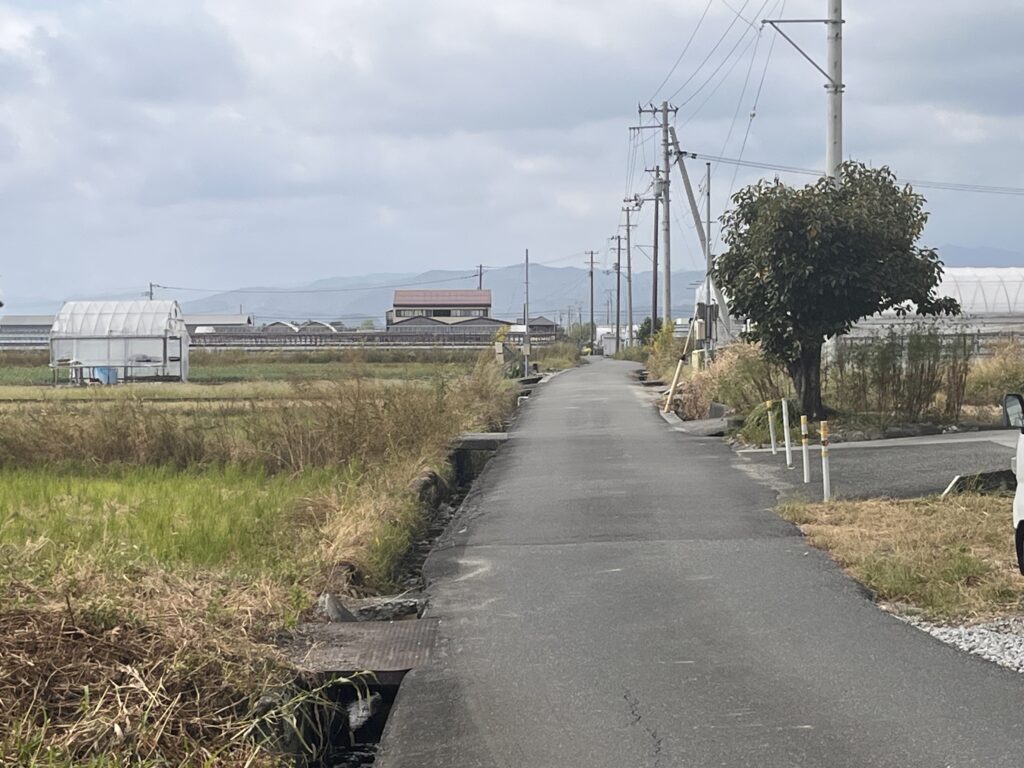
I found a convenience store further down the road to have lunch. This one provided a seating area, so I rested there for a while and ate copious amounts of packaged sushi and other foods both healthy and comforting. While not of Michelin star status, Family Mart’s offerings are usually of a very good standard, and always welcome after a demanding day on the road. My day was only half over, however. Getting to my feet after lunch was proving to be a challenge, and starting to walk after even a brief rest required me to attach jumpleads to my feet. Whatever the tsunami walls I was so accustomed to walking on could protect me from, it was nothing compared to the disaster zone in my boots. That said, I was pretty fine from the ankles up. I plundered on to temple 29, and as I crisscrossed more rice fields via punishing concrete paths the message that my feet had been sending my brain for the previous week was finally received: I needed to rest.
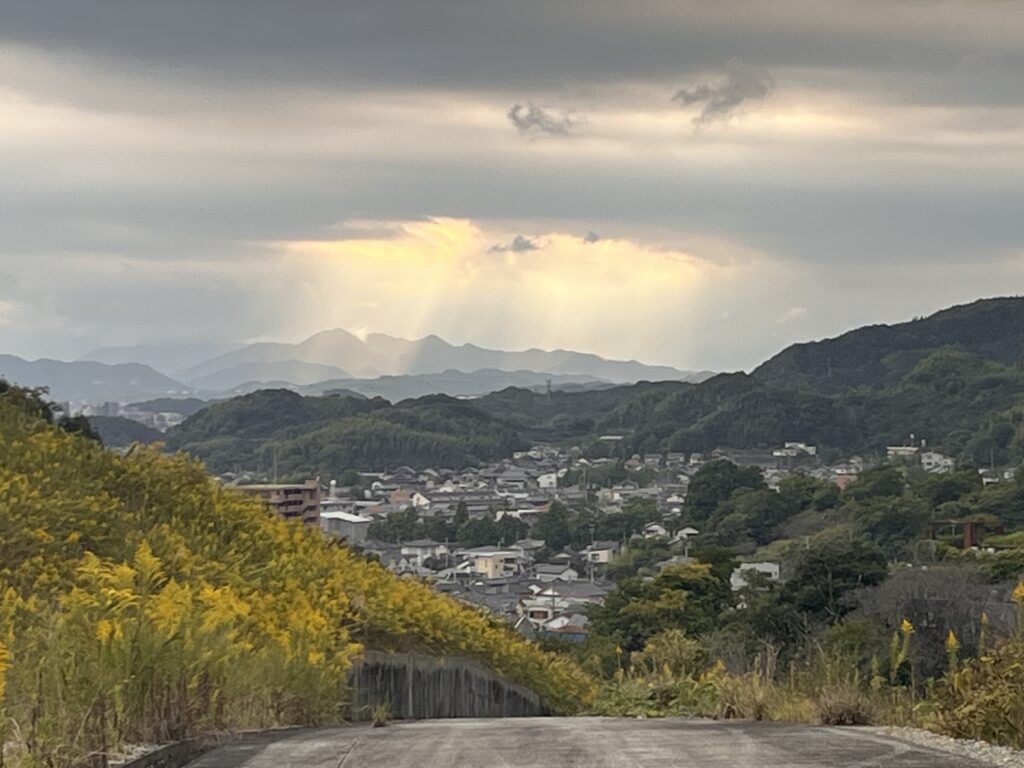
I did, but I still had a bit of a journey to travel that day. The road twisted through industrial estates, up into hills, and past solemn graveyards and tombs which are dispersed all throughout Japan. Temple 30 was ultimately reached and the rituals performed. I met Edward there and we then left the trail and headed for Kochi City. I’ve always been very insistent that I never take any form of transport while on a long pilgrimage. I once stared down a bunch of hunters on the plains of Spain and stubbornly insisted on walking through an area where they were shooting wild boar rather than taking a lift. But I was prepared to make an exception here in Kochi. I allowed myself the luxury of taking the train to the centre of the city, where I was going to spend two nights, but only on the condition that I return to the same spot and resume walking from there. With that piece of pilgrim legislation sorted out in my head, I went to the train station.
PILGRIM REBORN?
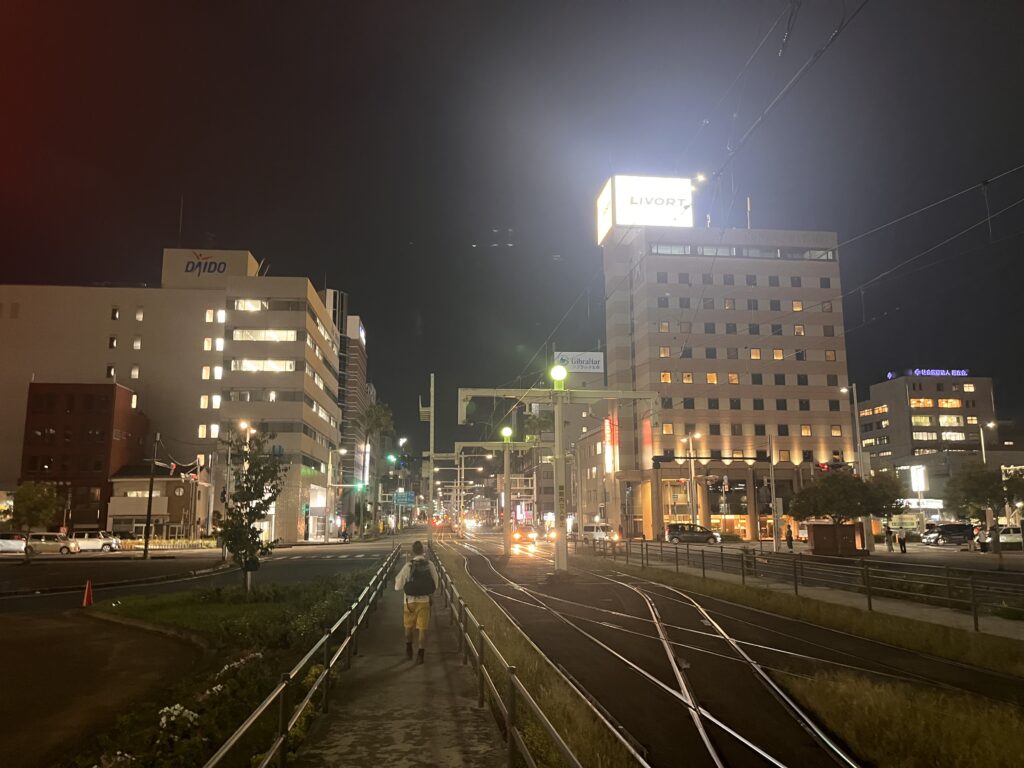
Arriving in a big (or medium) sized city after a week in rural towns and villages was a bit of a culture shock, but it felt good to be back in the modern world. The chosen life of hardship and sacrifice was temporarily suspended, and I could live a more normal existence again. Kochi was a regular Japanese city. I had seen many like it on my travels. The train station was at the centre, and the central business district radiated out from this core. It looked nice, and inviting but I had only two things on my mind: Fixing my suffering feet, and sleeping. And food would be good too.
I found a hostel online. It was only available for one night so I’d have to move the next day, but that would be tomorrow’s problem. Tonight was about resting my feet. Fixing them was for the next day too. The hostel was a bit cramped, and having a top bunk was a challenge equivalent to scaling the Matterhorn. If wearing any kind of footwear indoors in Japan was a taboo more serious than coveting your neighbour’s wife, then wearing flip flops was as serious as coveting his ox. But without something supportive on the soles of my feet I was immobile. I apologise to my Japanese roommates, and the employees, management and shareholders of that hostel, but I had to wear those flip flops. Yes I was an ignorant gaijin, but sometimes the need to escape pain trumps social etiquette. Even in a country like Japan. I was prepared to endure generations of shame as a consequence.
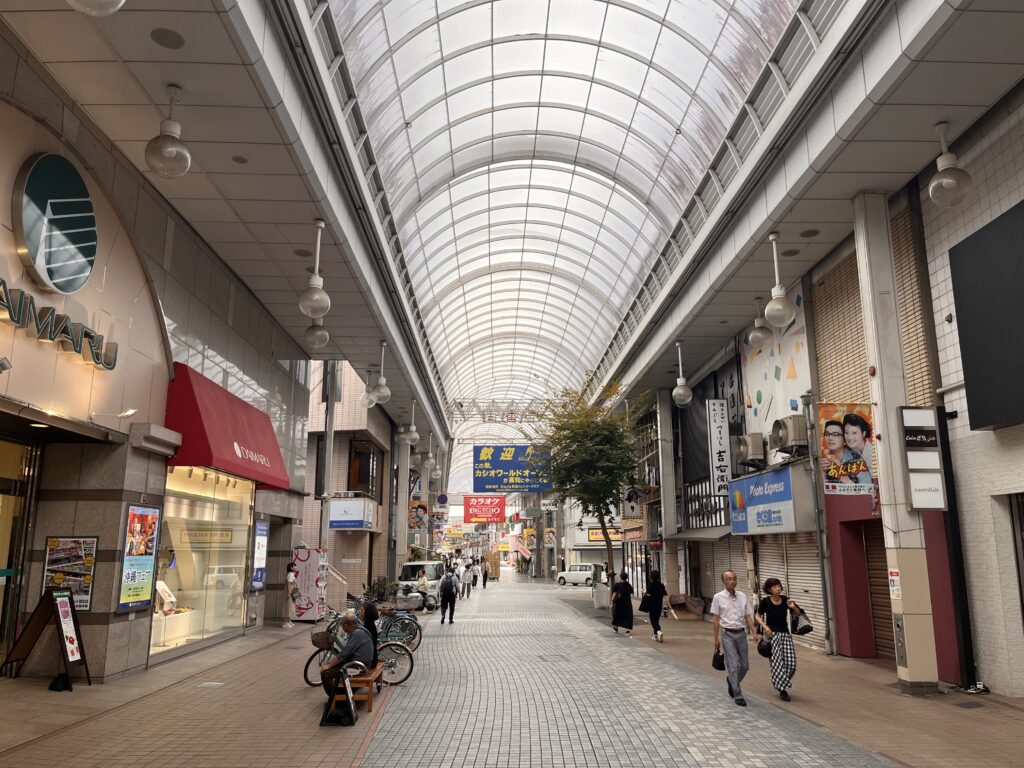
I explored Kochi the next day, with pharmacies being my first port of call. I shuffled and hobbled around the city like an old man who’d been subject to a punishment beating. I wandered through a long indoor arcade, a feature of every Japanese city, where I stocked up on ointments, bandages, dressings, gauzes, second skins and tried to purchase some more determination but I couldn’t find a shop that supplied it. Not even in an innovative country like Japan. I’d have to make that myself.
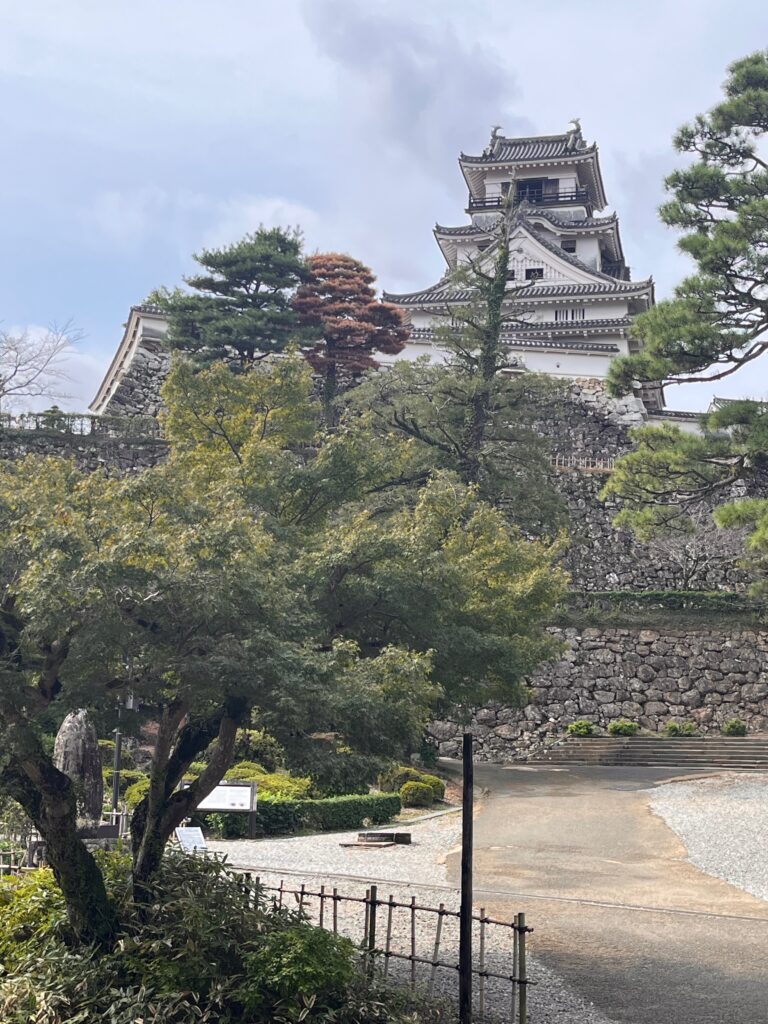
While this was supposed to be a day of rest I still clocked up thousands of steps exploring the city. I took in the impressive grounds of the local castle, though I didn’t go inside as I’d have to take off my shoes. That was out of the question. The rest of the city proved to be pleasant and relaxed, a lowkey mix of shops, businesses and residences, much like any small Japanese city. After having a sweet Japanese curry for lunch I had to move lodgings, and once I checked into my new place I decided to have an afternoon nap. It lasted three hours. I guess I must have been tired. I wonder what could have caused that. I was due to resume walking the next day. Many long and lonely roads of Kochi prefecture lay ahead of me. The ascetic phase of this journey was far from over. Again, I had to ask myself why was I walking this? The only answer was because I can. I couldn’t think of a better reason at this point, so that would have to do. Walk on.